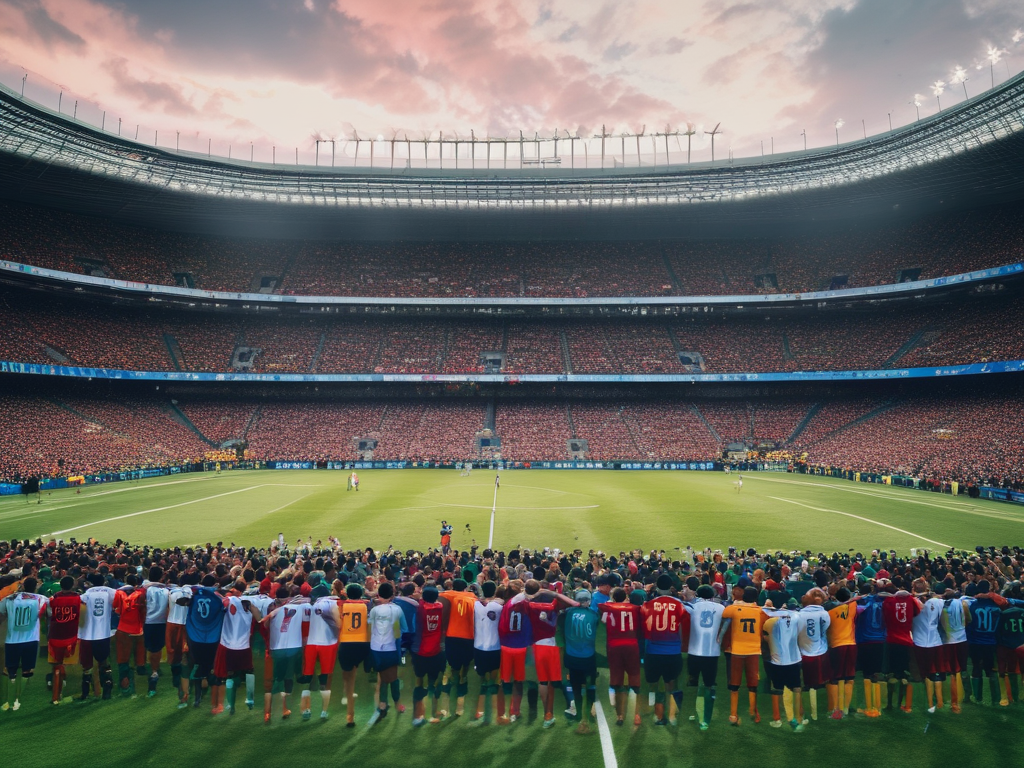
Soccer is not just a game. It is a way of life. And it has helped mold me into the person I am today.
My love for “the beautiful game” began during the World Cup Finals in 1994. I was an 11-year-old kid living in a small town in Central Missouri at the time.
My father, a Nigerian immigrant, always had a deep-rooted love and intrinsic appetite for the sport and ensured we did too, often gathering us around the television set to watch the exhilarating displays.
I remember being enthralled by the otherworldly skills of celestial talents such as Romário de Souza Faria, Roger Milla, Roberto Baggio, Hristo Stoichkov, and one of my favorites, the Nigerian magician, Jay-Jay Okocha.
At the time, I had been dominating the local youth soccer scene, but the performances I had witnessed in those World Cup games were something to behold; The pace. The speed. The agility. The tactical intelligence. The mesmerizing stepovers. The sleek nutmegs. The audacious overhead kicks. The tight ball control. The deft touches. The range of passing. The movement. The creativity. The passion. The fight. The intense emotions on the field. The vibrant colors of the jerseys.
As a family, we were hooked; We cheered. We booed. We laughed. We cried. We watched in awe.
The World Cup had very much become a cherished tradition in our household. It gave us magical experiences. It brought us together. And it resulted in indelible memories that I still cherish to this day.
For those ninety minutes, we were all glued to the pulsating matches, bound by the same passion and spirit. It truly was a special and electrifying time.
“The beauty of the World Cup is that while thirty-two countries get to cheer for their respective teams, the event also affirms a global pluralism,” said Clint Smith, an American writer, poet, and former college soccer player.
“It is as much a festival of cultural multiplicity as it is a competition featuring some of the best athletes in the world.”
Martin Jacques, a British journalist, editor, academic, political commentator, and author also expressed his affection for the storied competition.
“The World Cup is not just a great global sporting event, it is also inscribed with much deeper cultural and political importance.”
The Fire is Ignited
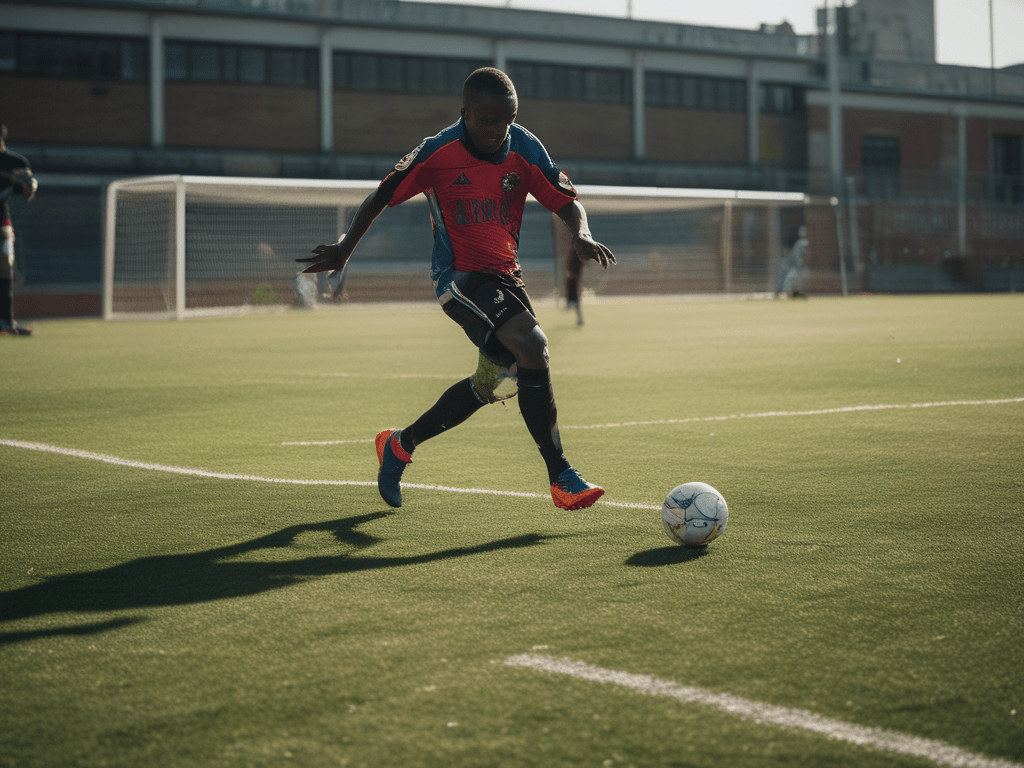
By the end of the World Cup, I had developed a deep love for soccer.
I took solace in perfecting my skills in any space I could find, wearing out my cleats as soon as my parents purchased them.
In the mornings, as the sun set. In the afternoons, during and after school. In the evenings, as the sun dipped below the horizon. Soccer was an integral part of my life.
It brought a perpetual smile to my face and gave me a natural joy for life. Whether practicing in my backyard, playing on the rubber surfaces of the elementary playgrounds, or dribbling through the narrow streets of my suburban neighborhood, I was at home. The ball never left my side.
For me, soccer wasn’t just a game played between the lines. Its reach was far beyond the confines of the field. It gave me an unyielding determination. It taught me the values of teamwork, respect, and perseverance.
It also gave me cherished memories from my childhood; The match-winning goals in front of hostile crowds. The celebratory pizza parties at Mazzio’s. The impassioned soccer chants and songs with teammates during long drives to games. Overcoming demoralizing defeats. Navigating ups and downs of victories and losses. The character building. It all was part of the wonderful experience.
For these reasons, soccer has always had a special place in my heart. Its indefatigable spirit to uplift, unite, change lives, and bridge cultures is inescapable.
It’s not just a sport. It’s a celebration of humanity; a momentous event enjoyed by millions – drawn to its electrifying nature and magnetic pull.
The Beautiful Game

While there are many sports that provide significant value and appeal, here are some reasons why I feel soccer is uniquely special.
It’s a Simple Game
One of the best aspects of soccer is its accessibility. It doesn’t require much equipment and minimal expenses are needed to start a game with friends. All you need is a ball and any open space or makeshift pitch.
This simplicity allows people of all ages and economic backgrounds to participate, providing an environment of inclusivity and transcending multicultural barriers.
This has undoubtedly played a big role in the sport’s international appeal.
Soccer has an estimated 5 billion fans across the globe “with Latin America, the Middle East and Africa representing the largest fan bases,” according to the Fédération Internationale De Football Association (FIFA), soccer’s international governing body.
It’s a Cultural Phenomenon
Soccer’s cultural significance in many countries is far reaching and deeply-rooted.
The sport is a societal cornerstone in many international communities, often playing a central role in bringing cultures, regions, and nations together.
Soccer also influences cultural identities and social issues.
In the study, “The World Through Soccer,” author Tamir Bar-On examines soccer’s cultural impact, stating the following:
“The world’s most popular sport, soccer, is a global and cultural phenomenon… As a reflection of soccer’s significance, the sport impacts countless aspects of the world’s culture, from politics and religion to business and the arts.”
Soccer’s importance and intersection with society particularly came to the forefront in France.
French President Emmanuel Macron used his political influence to persuade Kylian Mbappé to play in the 2024 Paris Olympic Games.
Mbappé, a French professional soccer player, is widely considered one of the best players in the world.
“I have no particular comment to make other than the fact that I am counting upon Real Madrid to free up Kylian for the Olympic Games so he can play with the French team,” Macron stated in a video posted on his X account.
In another case, Ghanaian MP Issac Adongo weaponized a football analogy to criticize Ghana’s vice president, Dr Mahamudu Bawumia, during a parliamentary debate; comparing his economic mis-management of the West African nation to Manchester United and England defender Harry Maguire’s declining performances on the pitch.
However, following a string of strong performances by Maguire, the Ghanaian MP later apologized for mocking the player, stating “He is a transformational footballer… now scoring goals for Manchester United.”
The International Events are Electric
There’s nothing like an international soccer tournament. The fervor and energy are unmatched.
Events such as the FIFA World Cup, UEFA European Championship, UEFA Champions League, Africa Cup of Nations, Copa America, Copa Libertadores, Confederations Cup, UEFA Europa League, as well as other international cups and competitions, have brought a massive amount of attention to the sport and continue to captivate millions of viewers every year.
The gripping nature of the tournaments is alluring; from the last-minute goals to dramatic saves and plays, the competitions create deep emotional connections and unforgettable moments on a large scale.
To add to this, the dynamic, unpredictable, and pulsating moments keep fans on the edge of their seats. The passion of the supporters and the electric atmosphere in the stadiums further add to the magnetic appeal.
The tournaments have also produced legendary players, memorable matches, and historic moments that have left an indelible impact on fans and the sporting world.
“For me soccer provides so many emotions, a different feeling every day,” said Ronaldinho Gaúcho, a Brazilian former professional soccer player who is widely considered one of the greatest players of all time, having collected numerous accolades, including two FIFA World Player of the Year awards and the Ballon d’Or, the highest personal recognition in soccer.
“I’ve had the good fortune to take part in major competitions like the Olympics, and winning the World Cup was also unforgettable. We lost in the Olympics and won in the World Cup, and I’ll never forget either feeling.”
It Requires Extraordinary Skill, Fitness, and Strategy
One of the most compelling aspects of soccer is the amount of skill, fitness, and strategy that is required.
To perform at a high level, players must be physically fit, technically skilled, and tactically aware. This results in a dynamic and engaging sport to watch and play.
To add to this, soccer involves constant running, which means players must have high cardiovascular health, stamina, and overall fitness.
The sport also requires great discipline, patience, coordination, balance, and agility developed from dynamic actions such as dribbling, passing, and shooting,
Additionally, players must possess the ability to communicate effectively, think critically, and make decisions in a split second; meaning enhanced levels of cognitive abilities and problem-solving skills are needed to function at an optimal level.
The benefits of playing soccer are further evident on a smaller scale.
In a study evaluating the effects of small-sided soccer games (SSSG) on physical fitness, physiological responses, and health indices in untrained individuals and clinical populations, researchers found that “there is evidence from original research that SSSG exposure provides performance and health benefits for untrained adults.”
It further suggests that “acute SSSG may elicit high cardiovascular and metabolic demands in untrained healthy adults and clinical populations.”
Final Thoughts
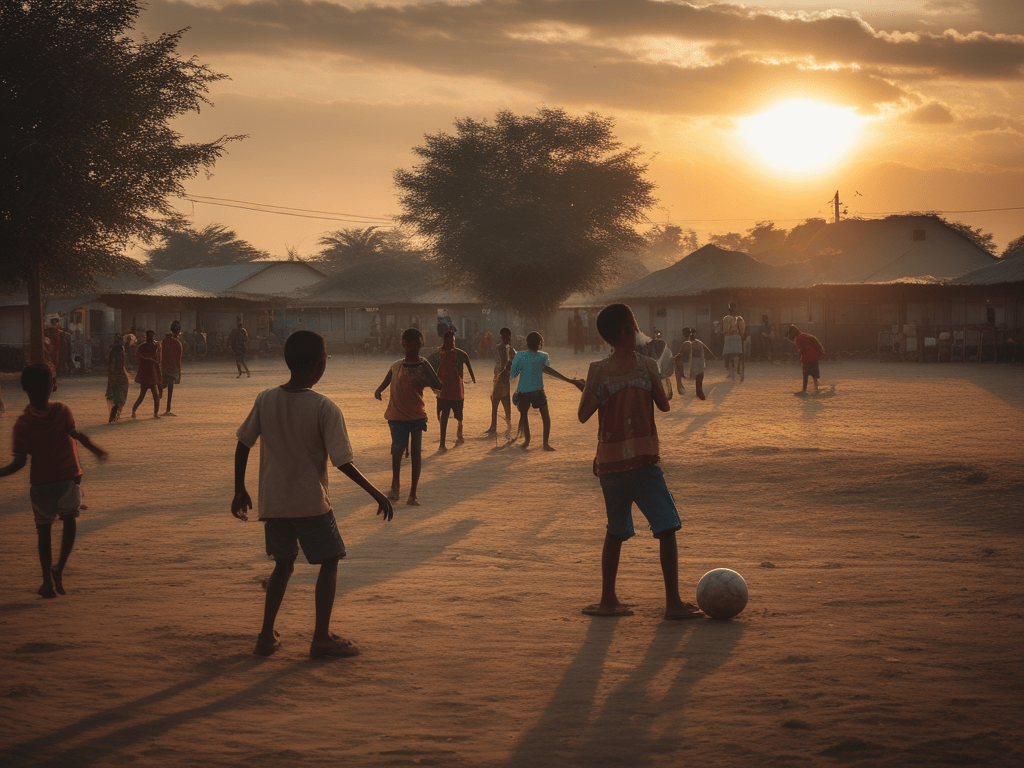
Soccer’s reach has far extended beyond the confines of the grassy fields, dirt paths, and concrete roads where so many have cultivated their skills.
It is a universal language that unites people of all ages, races, genders, and religious affiliations; a great equalizer, transcending cultural and linguistic barriers and bringing all walks of life together to share in the beauty of the game.
So what are your thoughts on this topic? Do you agree with my assessment of the beautiful game? Has soccer influenced your life in a similar way?
Add your comments below! And if you enjoyed this story, please consider making a donation below. This allows us to create the best content possible for the site.
About the Author

I’m a communication coach, award-winning technical content communicator, music producer, songwriter, blogger, professor, and sports aficionado.
For communication advice, uplifting musical content, and thought-provoking interviews, and blog content, join me at: https://anietiecommunity.com/why-i-started-this-community/.
Make a one-time donation
Make a monthly donation
Make a yearly donation
Choose an amount
Or enter a custom amount
Your contribution is appreciated.
Your contribution is appreciated.
Your contribution is appreciated.
DonateDonate monthlyDonate yearly Anietie Blog
One response to “The Magnetic Power of Soccer: A Guide to the Beautiful Game”
Terrific narrative. But it started in the 1990 World Cup, I’m pretty sure. You were 7, playing for me in U-8 and doing stepovers, like the WC players.
Sent from AT&T Yahoo Mail for iPhone
LikeLiked by 1 person