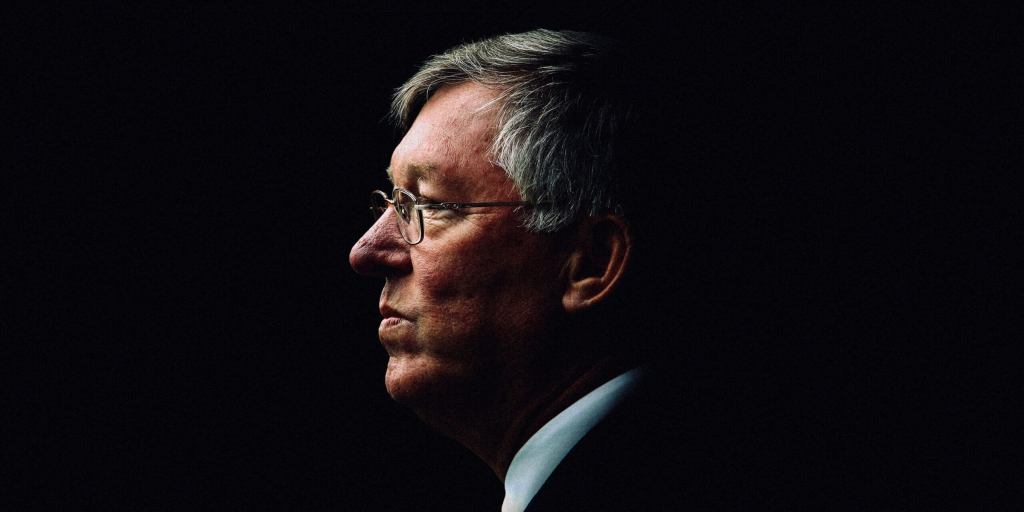
Sir Alex Ferguson didn’t just welcome the big stage. He reveled in it and built a monumental career off of an ultra-competitive mindset and relentless drive to rise to the biggest occasions.
These qualities were on full display during the 1999 UEFA Champions League Final.
On a clear and humid evening, his battle-tested United squad faced Bayern Munich, a formidable and historic club, known for its extraordinary tradition of producing world-class and electrifying players.
As the team trailed 1-0 at halftime and with the world watching, Ferguson tapped into his uncanny ability to inspire his team.
“You’ve seen that trophy out there on the halfway line. If you don’t win this, we won’t be able to touch it,” he said while calmly addressing the team.
“Don’t leave anything out there,” he added. “When you come off the pitch, just make sure you give everything.”
The message was simple, yet transformative and game-shifting. It gave the players all the belief they needed and United went on to famously turn the game around in stoppage time; capping a legendary last-minute turnaround in exhilarating fashion and securing one of the biggest trophies in world soccer.
The unforgettable comeback not only solidified Ferguson’s legacy but also etched Manchester United’s name in soccer history, a testament to Sir Alex’ masterful leadership and extraordinary ability to inspire his players in the most challenging of times.
“His man-management skills were incredible. He knew exactly how to handle different players, different egos, and get the best out of everyone.”
–Wayne Rooney, record goalscorer for Manchester United and the England national team.
The “Hairdryer” Treatment
“We all learned from him. What he achieved at Manchester United was unbelievable, and his influence on football will never be forgotten.”
–Pep Guardiola, current manager of United’s bitter rival, Manchester City.
Ferguson’s communication style, while at times harsh, mainly featured a blend of directness, motivation, and psychological management.
He also possessed an intrinsic and artful ability to read a situation and adapt his messaging to enhance the impact of his words.
For instance, he knew when to be harsh. When to be supportive. When to build personal bonds with players. When to cheer up the squad. And when to use psychology to maintain team spirit.
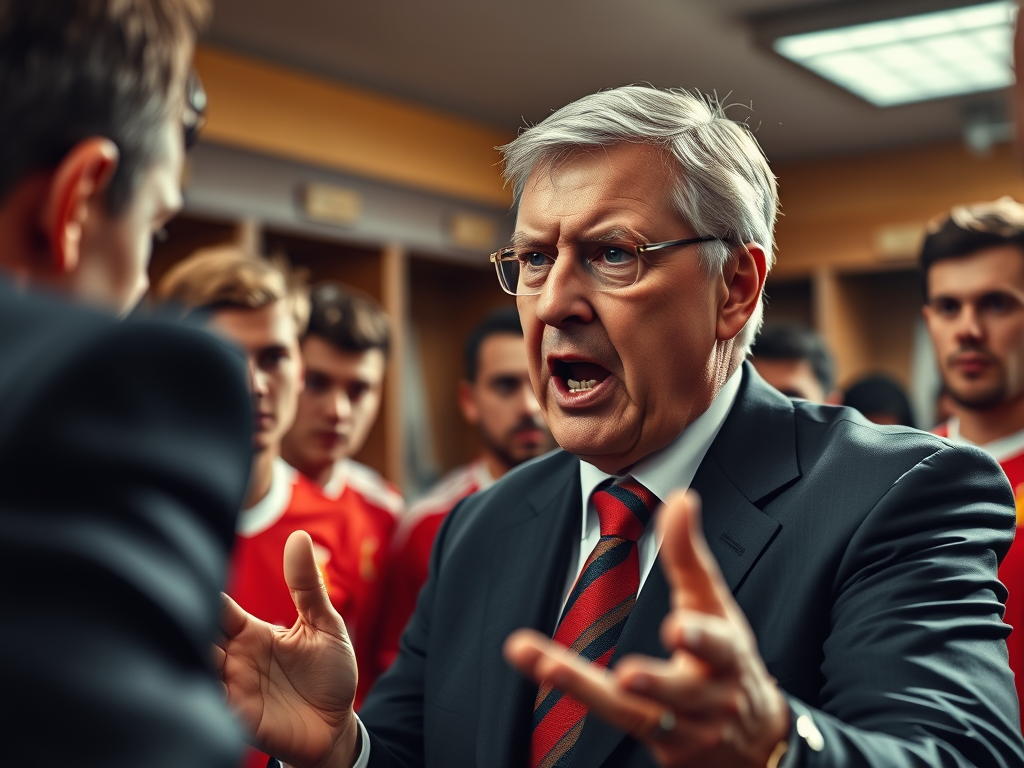
One of the best examples of Ferguson’s harsh, yet, direct style was his use of the “hairdryer treatment,” a term players used to describe his intense locker room exchanges when his team underperformed and failed to meet his high standards.
Ferguson’s fierce dressing-room rants became legendary and almost mythical. He didn’t always shout during these outbursts, but when he did, it had an incredible impact on getting players to respect his authority.
Perhaps the most famous example was an intense encounter he had with David Beckham in 2003.
After a disappointing FA Cup loss to Arsenal, the Manchester United boss stormed into the dressing room and let loose on the players, delivering a scathing critique of their performance.
After berating Beckham for his lackluster display, he kicked a boot lying on the floor, striking Beckham just above the eye and causing a small cut.
Furious, Beckham reportedly tried to confront Ferguson, but teammates quickly stepped in to hold him back. The following day, Beckham arrived at training with stitches over his eyebrow. Shortly after this pivotal event, he was sold to Real Madrid, marking the end of his incredible Manchester United career.
The story is a perfect encapsulation of Ferguson’s no-nonsense communicative approach, and while his methods were not always perfect, one thing always remained true; no player, no matter how big a star, was bigger than the team.
“The minute a Manchester United player thought he was bigger than the manager, he had to go,” Ferguson later explained.
Ferguson’s Use of Adaptive Communication

“If you let him down, you knew about it. You didn’t want to be on the receiving end.”
–Wayne Rooney
Ferguson’s passionate outbursts and scathing critiques were strategic and not just about maintaining control and balance. Players understood it was a sign that Ferguson cared deeply about the collective performance of the team.
From Ferguson’s view, it was never about belittling the team. It was about pushing them to reach their potential.
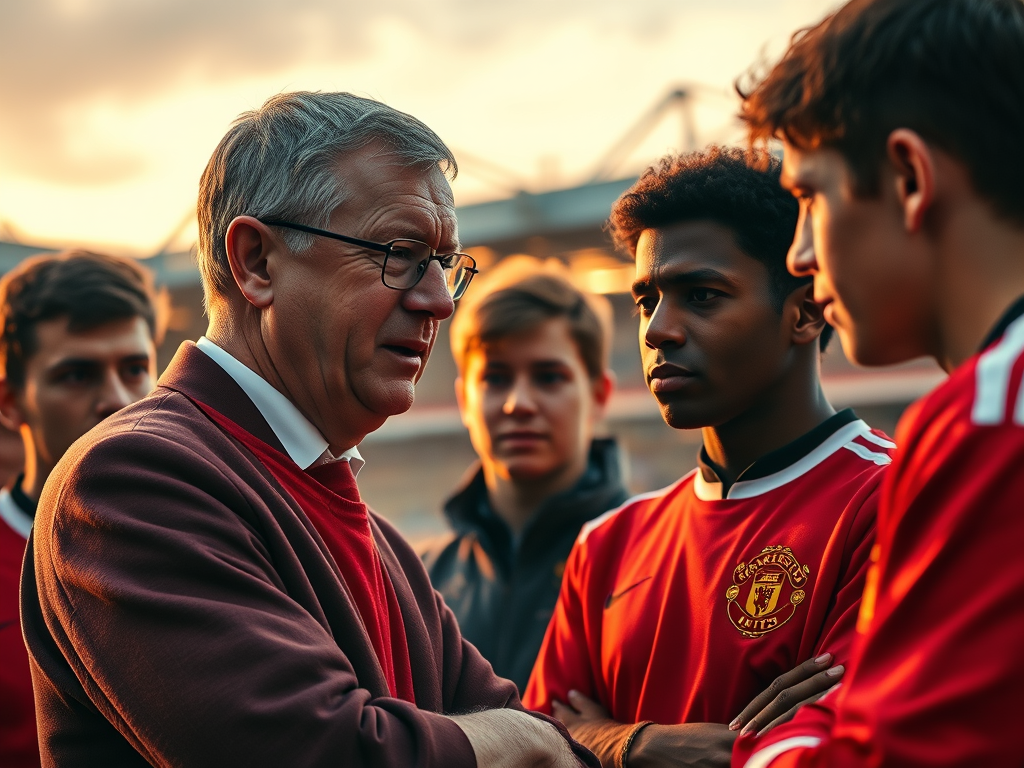
While the United boss was known for his strict discipline and directness, he typically relied more on adaptive communication to nurture player relationships; having a keen understanding of when to be tough, when to offer personal encouragement, or when to use another form of communication to produce maximum results.
By tapping into this more dynamic communicative approach, he was able to get the best out of many of his star players, including Eric Cantona, Cristiano Ronaldo, and Wayne Rooney, allowing them to lean on him for support.
Even after Cantona’s infamous kung-fu kick on a Crystal Palace fan, which led to the former United player being banned from soccer for nine months, Ferguson opted for a more empathetic approach; much to the surprise of many fans and pundits.
Rather than criticize him, he flew to Paris to meet with Cantona in-person to reassure him that he still believed in him.
This proved to be another masterclass in Ferguson’s use of man-management and motivational techniques as Cantona stayed, repaying Ferguson’s faith, and helping United dominate English soccer.
“He was my father in football. He taught me everything.”
-Cristiano Ronaldo, legendary former Manchester United and Real Madrid player.
A Look into the Boss’ Communication Profile
Ferguson is widely regarded as one of the greatest managers in the history of soccer.
A few key reasons for this success and longevity have been his exceptional communication skills and ability to manage, motivate, and get the best out of his players.
Let’s take a closer look at some of the biggest characteristics that made Ferguson so successful.
1. Emotional Intelligence & Man-Management
One of Ferguson’s best traits was his understanding of how to connect with players on a deep and personal level.
He understood what motivated his squad, whether it was encouragement, discipline, or tough love, allowing him to even maximize the play of the squad’s fiercest personalities and leaders such as Roy Keane and Rio Ferdinand.
Ferguson was very attuned to the mental condition of his players and was able to quickly recognize when they were going through emotional struggles; offering support by speaking privately or giving them time to reflect.
This enabled him to maintain a respectful environment where players trusted him as someone who genuinely cared about their well-being.
“He knew exactly how to handle every player differently.”
– Ryan Giggs, former Manchester United player and one of the greatest players of his generation.
2. Clear and Direct Communication
Ferguson maintained a direct communication style during his tenure at United.
Players knew exactly what to expect from him, whether it was tactical adjustments, or having the right attitude on the pitch. His infamous half-time motivational talks, though brutally honest at times, left no room for misinterpretation.
Ferguson was also known for his no-nonsense approach. He didn’t sugarcoat things and would often speak directly to players, both privately and publicly.
His straightforwardness earned respect from players as they knew exactly where they stood.
“He was ruthless, which I admired. He always wanted to win. I might have had my differences with him, but there’s no denying he was the greatest manager of all time.“
– Roy Keane, former Manchester United midfielder and one of the most decorated Irish footballers of all time
3. Adaptive Communication
While Ferguson could be tough and direct, he was also incredibly adaptable in his communication.
He knew that different players required distinct types of motivation. Some responded better to a softer, more encouraging approach, while others thrived under pressure.
Thus, he had a strong capacity to read players and tailor his communication style to get the best out of his squad.
“He knew exactly how to handle every player differently.”
– Ryan Giggs
4. Inspirational and Motivational Leadership
Ferguson’s ability to instill belief into his teams was unmatched.
Before the famous 1999 Champions League final comeback against Bayern Munich, he sparked a fire within his squad, simply telling his players: “At the end of this match, the European Cup will be in that stadium. You can either walk past it or lift it.”
This was all the motivation the players needed to snatch a historic victory.
5. Masterful Control of the Media
Perhaps one of Ferguson’s most impressive traits was his mastery of managing and controlling the press; knowing when to defend his team and when to put pressure on referees or rivals to affect results.
His “mind games” as the media described it, particularly with managers such as Arsène Wenger and Rafa Benítez, often gave his team a huge psychological advantage.
He knew when to play the media game, deflect criticism, or shift the focus on to his players when necessary.
His ability to protect his players from outside pressure, while also handling difficult questions from the press, helped maintain team morale and keep his squad focused on upcoming games rather than external distractions.
“He was the master of the game outside of the game… a master of psychology, a great manager, and a winner. He knew exactly how to get the best out of me.”
– Eric Cantona.
6. Cultivation of a Family Environment
Ferguson was a big advocate of maintaining unity within the team. This led to an atmosphere where every player felt part of something bigger; helping to create a cohesive squad that placed more emphasis on shared values and what’s best for the team.
Thus, at the heart of Ferguson’s philosophy was the collective goal to succeed as a team.
“He changed my life. He made me a better player and a better man.”
–Patrice Evra, former captain of Manchester United and the France national team
7. Clear Expectations and Accountability
Ferguson never shied away from setting high expectations, holding players accountable, or making tough decisions; whether it was dropping a star player or making a controversial transfer.
Even during some of his most difficult moments, he remained clear and concrete in his communication.
This resulted in a competitive environment where each player knew they had to be on their game, requiring consistency in performances, training, and attitude.
“You had to meet his standards, or you were gone.”
– Rio Ferdinand, former Manchester United player and one of England’s greatest defenders
8. Timely & Motivational Speeches
Ferguson was a master at delivering motivational speeches that inspired big moments and performances.
Whether it was a simple pep talk before the game or a more detailed tactical discussion at halftime, he instilled belief and urgency in his squad, ensuring that they were always prepared and ready for the next challenge.
“He was the reason I joined Manchester United. I wanted to play for the best manager in history.”
– Robin van Persie, former Manchester United striker and one of the best strikers of his generation
9. Management of Controversy
In the highest-pressure moments, Ferguson managed conflicts and player egos with calmness and aplomb.
His effective management of rivalries also ensured that any friction within the squad didn’t affect the team’s overall performance.
His strong leadership and communication in these tough situations were key to maintaining balance and ensuring the team functioned as a collective unit.
“If you stepped out of line, you knew about it. But he always had your best interests at heart.”
– David Beckham, former Manchester United player and one of the greatest midfielders of his generation
Final Thoughts
Considered by many to be one of the most successful managers in the history of soccer, Ferguson’s strategic vision, leadership qualities, adaptability, emotional intelligence, and elite communication skills set him apart from his peers.
Armed with an innate ability to read players, situations, and interactions, the United boss possessed a high capacity to motivate players; making him not just a soccer manager, but an ultimate leader and talismanic figure.
During his incredibly successful stint from 1986 to 2013, United became one of the most dominant forces in world soccer, winning numerous domestic league titles, FA Cups, and UEFA Champions League trophies.
In 2013, Ferguson retired from coaching, leaving behind a deeply impactful legacy that still influences generations of managers today.
So, what are your thoughts on this topic? Do you have a favorite memory of Sir Alex? Post your comments below!
About the Author

Charles Anietie Iyoho
I’m a communication coach, award-winning technical communicator, blogger, professor, and sports aficionado.
For communication advice, uplifting musical content, and thought-provoking interviews and blog content, join me at: https://anietiecommunity.com/why-i-started-this-community/.
Make a one-time donation
Make a monthly donation
Make a yearly donation
Choose an amount
Or enter a custom amount
Your contribution is appreciated.
Your contribution is appreciated.
Your contribution is appreciated.

